Superaquecimento do laptop: causas e soluções
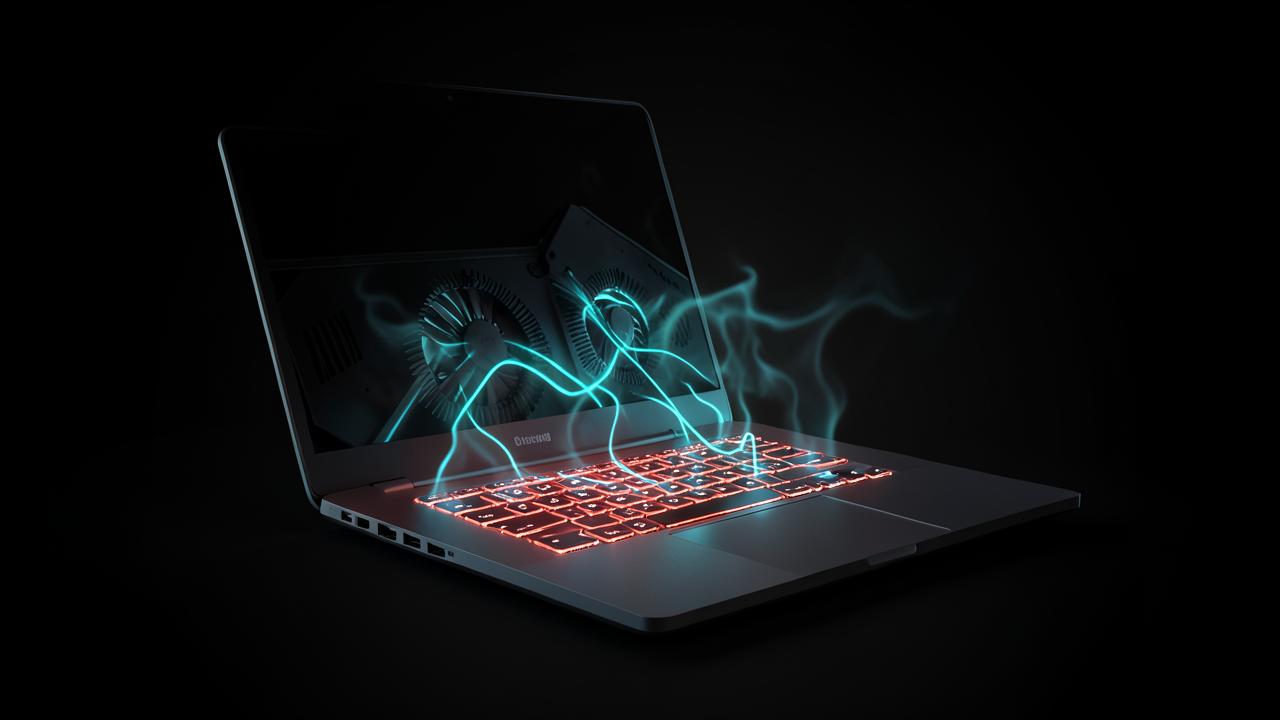
Um laptop quente que desacelera sob carga está propositalmente reduzindo o desempenho para se proteger. Corrigir o fluxo de ar e a poeira geralmente é mais eficaz do que qualquer ajuste de software.
Before you start troubleshooting, run the actual test so you know what's broken.
Run the Benchmark de CPUVerificações rápidas primeiro
- Verifique a superfície onde ele está apoiado. Camas, almofadas de sofá e tapetes bloqueiam as entradas de ar na parte inferior da maioria dos laptops, o que é a causa mais comum de superaquecimento.
- Levante a borda traseira. Mesmo uma pequena abertura, usando um livro ou um suporte para laptop, melhora visivelmente o fluxo de ar em laptops que puxam o ar por baixo.
- Feche aplicativos e abas do navegador não utilizados, especialmente qualquer coisa que esteja fazendo codificação de vídeo, renderização 3D ou mineração de criptomoedas em segundo plano sem o seu conhecimento.
- Verifique a temperatura ambiente. Um laptop funcionando bem em um quarto com ar condicionado pode superaquecer em um quarto quente ou sob luz solar direta.
Confirme se é realmente um problema de calor
Atrasos sob carga, ruído súbito da ventoinha aumentando ao máximo e o chassi ficando quente ao toque perto do teclado ou das saídas de ar são os sinais clássicos de thermal throttling. Execute nosso Teste de CPU por alguns minutos e observe se o desempenho cai quanto mais tempo o teste é executado. Uma CPU que pontua bem nos primeiros 30 segundos e depois cai drasticamente está limitando o desempenho devido ao calor.
Windows 11
- Abra o Task Manager (Ctrl+Shift+Esc) e observe o uso da CPU e a velocidade do clock em Desempenho ao executar uma tarefa exigente.
- Para leituras de temperatura reais, use o utilitário próprio do fabricante da placa-mãe/laptop, se fornecido (muitos laptops gamer incluem um), já que o Windows não mostra a temperatura da CPU nativamente.
macOS
- Abra o Activity Monitor e verifique a aba CPU para uso alto e sustentado; o macOS reduzirá silenciosamente o desempenho sob pressão térmica em vez de mostrar um aviso.
- Ouça o ruído da ventoinha. Os Apple Silicon MacBook Airs não possuem ventoinha, então cargas de trabalho pesadas e sustentadas limitarão o desempenho notavelmente mais rápido do que em um MacBook Pro com resfriamento ativo.
Limpe as saídas de ar e os ventiladores
O acúmulo de poeira dentro das saídas de ar e nas pás da ventoinha é a principal causa de superaquecimento em laptops com mais de um ou dois anos, especialmente se usados em superfícies macias ou perto de animais de estimação.
- Desligue o laptop e desconecte-o completamente.
- Use um spray de ar comprimido nas saídas de exaustão (geralmente na parte traseira ou lateral, perto da dobradiça) em jatos curtos, segurando as pás da ventoinha, se possível, para que não girem perigosamente rápido.
- Se você se sentir confortável em abrir o painel inferior e sua garantia permitir, remova a tampa traseira e limpe a ventoinha e as aletas do dissipador de calor diretamente com ar comprimido ou uma pequena escova macia. Isso é muito mais eficaz do que apenas soprar ar pelas saídas.
- Evite aspirar as saídas de ar diretamente, a descarga estática de um bico de aspirador pode danificar os componentes.
Correções de software e configurações
Windows 11
- Go to Settings > System > Power & battery and choose Best power efficiency instead of Best performance if you don't need maximum speed.
- Verifique o Task Manager para processos em segundo plano que usam alta CPU consistentemente e encerre ou desinstale qualquer coisa desnecessária.
- Atualize o utilitário de controle da ventoinha ou gerenciamento de energia do fabricante do seu laptop e verifique se há uma atualização de BIOS; os fabricantes às vezes lançam firmware especificamente para corrigir problemas térmicos em certos modelos.
macOS
- Verifique o Activity Monitor para um processo descontrolado, esta é a causa mais comum das ventoinhas de um Mac funcionarem constantemente na velocidade máxima.
- Redefina o SMC (System Management Controller) em Intel Macs, que controla o comportamento da ventoinha; em Apple Silicon Macs, um reinício normal alcança o mesmo efeito, já que não há uma redefinição de SMC separada.
Resfriamento externo e hábitos de uso
- Uma base de resfriamento para laptop com suas próprias ventoinhas pode reduzir as temperaturas de forma mensurável durante o uso pesado e contínuo, como jogos ou edição de vídeo.
- Evite executar cargas de trabalho exigentes com o laptop fechado e conectado a um monitor externo, "modo clamshell", a menos que você saiba que seu modelo gerencia bem o calor dessa forma. Alguns laptops limitam mais o desempenho porque a tela interna (que ajuda a dissipar o calor) está desligada.
- A substituição da pasta térmica entre a CPU e o dissipador de calor pode restaurar o desempenho em laptops com três ou mais anos, mas isso envolve abrir o laptop e é melhor deixar para alguém confortável com desmontagem ou uma oficina de reparos.
Quando é uma falha de hardware
- Se a ventoinha não gira de forma alguma, mesmo sob carga pesada, ou só gira intermitentemente com um ruído de rangido ou clique, a própria ventoinha provavelmente precisa ser substituída.
- Se a limpeza das saídas de ar e a reaplicação da pasta térmica não reduzirem as temperaturas, o heat pipe ou o dissipador de calor podem estar danificados ou mal encaixados, o que requer reparo profissional.
- Desligamentos súbitos sob carga, em vez de desaceleração gradual, indicam que o laptop está atingindo uma temperatura crítica e cortando a energia para se proteger. Pare de usá-lo sob carga pesada até que seja reparado.
- Uma bateria que incha ou estufa também pode pressionar os componentes internos e bloquear o fluxo de ar. Se você notar o trackpad levantando ou a carcaça não assentando plana, pare de usar o laptop e solicite a inspeção da bateria imediatamente.
What overheating actually does to performance
Modern processors do not fail when they get hot, they slow down. Thermal throttling reduces clock speed to keep temperature within a safe limit, which protects the hardware but produces exactly the symptoms people describe as the laptop suddenly getting slow. A machine that benchmarks well for thirty seconds and then drops by half is almost certainly throttling rather than failing.
This is why heat and performance troubleshooting are the same task. If a computer is fast when cold and slow when warm, no amount of software cleanup will help, and the fix is airflow. Watching temperature and clock speed together during a sustained load makes the pattern obvious within a couple of minutes.
Airflow is the whole problem
Laptops pull cool air in through intakes, usually on the underside, and push hot air out through side or rear vents. Anything that blocks either end breaks the entire cooling system, and soft surfaces are the worst offenders because they conform around the chassis and seal the intakes completely.
- Never use a laptop on a bed, sofa, cushion or blanket for sustained work, use a hard flat surface.
- Raising the rear even a couple of centimetres improves intake airflow measurably.
- Keep the exhaust vent clear, pushing the laptop against a wall or monitor stand recirculates hot air straight back in.
- Dust builds as a felt-like mat on the heatsink fins, invisible from outside but devastating to airflow.
- Ambient room temperature matters, a machine that is stable at twenty degrees may throttle at thirty.
Software causes of unexpected heat
If a laptop runs hot while apparently idle, something is using the processor. Before assuming a cooling fault, find the workload, because the fastest way to cool a machine is to stop it doing unnecessary work.
- Sort processes by processor usage and identify anything consistently above a few percent while idle.
- Check for a stuck indexing or backup job, both run hard for long periods after a large file change.
- Look at browser tabs individually, a single misbehaving page can saturate a core indefinitely.
- Check whether a discrete graphics card is being used for something trivial, which raises heat sharply.
- Set the power mode to balanced rather than maximum performance, the speed difference is small and the temperature difference is large.
Maintenance schedule and when to get help
Treat cooling as routine maintenance rather than an emergency repair. A few minutes twice a year prevents the gradual decline that ends with a machine throttling constantly.
- Blow out the vents with compressed air every six months, holding the fan still so it does not spin freely and generate voltage.
- In dusty homes or with pets, do it quarterly, hair mats the heatsink much faster than dust alone.
- Consider a professional internal clean and thermal paste replacement every three to four years.
- Replace a fan that rattles or grinds promptly, a failing bearing precedes total failure by weeks.
- If the machine shuts down abruptly under load, stop using it for heavy tasks until it is serviced, that is a protective shutdown at a critical temperature.
Benchmarking after a clean is worth the two minutes, because it turns a vague feeling that it seems better into a number you can compare next time.
Common questions about laptop heat
What temperature is too hot?
Brief peaks near ninety degrees Celsius under heavy load are normal for most laptop processors and are within design limits. The number that matters is the sustained temperature during ordinary work. Sitting above eighty degrees while browsing, or throttling within a minute of any load, indicates a cooling problem worth addressing.
Do cooling pads actually work?
Modestly. Most of the benefit comes from lifting the machine and giving the underside intakes clear air rather than from the fans themselves, and a simple stand achieves much of the same result. A pad helps most on laptops that draw air from below and least on those with rear-only intakes.
Is loud fan noise a bad sign?
Not by itself. Loud fans mean the cooling system is doing its job under load. Worry when the noise changes character, a rattle, grinding or clicking indicates a failing bearing, or when the fans run constantly at full speed while the machine is idle, which usually points to a stuck background process or a blocked heatsink.
Can heat permanently damage the laptop?
Processors protect themselves by throttling and shutting down, so outright cooking is unlikely. Sustained heat does shorten the life of the battery and other components over years, and repeated thermal cycling stresses solder joints. Fixing airflow early is far cheaper than a mainboard or battery replacement later.
Measure the improvement rather than guessing
After cleaning vents or changing settings, it is tempting to declare the problem solved because the fans sound quieter. Take a measurement instead, so you know whether anything actually changed and by how much.
- Let the laptop sit idle for ten minutes and record the resting temperature and fan behaviour.
- Run a sustained load for five minutes and record the peak temperature and the clock speed it settles at.
- Repeat the same load after your changes, in the same room at the same time of day for a fair comparison.
- A lower settled temperature with a higher sustained clock speed is the result you want, that is throttling reduced.
Keep the numbers somewhere simple. Six months later, comparing against them tells you immediately whether dust has built back up, and it turns cooling maintenance from guesswork into a routine with visible results.